
"Maison de Garance" by French General
….Nancy Sue. Congratulations Nancy Sue I’m going to get your fabrics together and put them in the mail to you. Hope you enjoy working with these bits and pieces.
–Penny
"Maison de Garance" by French General
….Nancy Sue. Congratulations Nancy Sue I’m going to get your fabrics together and put them in the mail to you. Hope you enjoy working with these bits and pieces.
–Penny
Posted in Uncategorized | 5 Comments »
"Maison de Garance" by French General
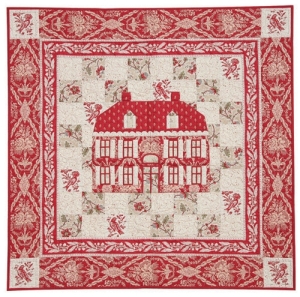
For the past week and a half I’ve been watching the French General blog website, checking back at least twice a day, to see when Kaari Meng was going to begin offering the quilts that my friend Keiko and I worked on with Kaari and her husband Jon. Well, I’m a few days late in announcing this but the kits are up and ready for viewing (and purchasing if you are so inclined). Kaari has given me pictures to post here so that you can see the full quilts in all their glory.
The first quilt I’m showing you is the Maison de Garance quilt, which was designed by Jon Zabala and Keiko Clark. I did the piecing and appliqué and Debbie Thornton from Prairie Queens Quilts did the machine quilting. If stitching this chateau doesn’t make you want to thow on a beret and book a trip on Air France, then nothing will.
"Reine des Abeilles" by French General
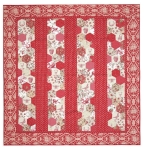
The second quilt (to the right) is the Reine des Abeilles quilt that Keiko designed and pieced with the help of Ayako Yamazaki. Again, Debbie Thornton was the machine quilter. Keiko has developed a nifty way to piece the large hexagons, so it’s worth it for the educational experience alone.
What you don’t see in the photos, however, are the extra goodies that French General will include as part of the “kit”. Each kit will come assembled in a tote bag made exclusively for this project, and will also include a hand silk-screened (and numbered label). Since there are only 50 kits…you’ll have proof that your quilt was spawned from one of the few issued.
So, tell us what you think — We’re excited to know. And, to encourage your comments I’m going to pull together the leftovers from making the Maison de Garance quilt for a little giveaway. Just leave a comment by Wednesday November 17th and I’ll pick the lucky winner.
And if scraps aren’t enough and you are inspired to pick up one of these wonderful kits…you can easily order them through www.frenchgeneral.com. Just click on the words “Quilt Kits” and look for the horse. I just wouldn’t wait too long. They will be gone soon.
— Penny
Posted in Uncategorized | 22 Comments »
This past weekend, my friend Mary Jenkins (who lives in Wales) emailed me that she had begun a blog and would I take a look at it. So, I immediately popped over and was pleased to find that her new endeavor is primarily focused on Welsh quilts, both those that she has made and antiques. (http://littlewelshquiltsandothertraditions.blogspot.com/)

Making Welsh Quilts by Mary Jenkins
But, before you go running off to her new online journal…let me take a minute to introduce you to Mary. She is the co-author of one of my favorite books, Making Welsh Quilts, as well as other articles that have appeared in various publications on the topic. In her book, Mary and her co-author, Clair Claridge, incorporate photos of antique Welch quilts as well as patterns for inspired reproductions. Best of all, they include elaborate whole-cloth quilting designs which brings the experience full circle. If you don’t have this book in your library, you may want to look into finding a copy. I believe that they are still available on most major online books sources.
Not that this wasn’t enough in terms of credentials, Mary was also instrumental in getting the Welch Quilt Study Group off the ground and has also told me that she is in the process of writing her second book on the subject Welsh quilts…this time small ones. Can’t wait to get a copy.

Mary and Cindy Hamilton
But, don’t just pop over to her blog for the quilt information and inspiration. Mary is also a master of collecting wondering British treasures. Everything from Staffordshire pottery, tartanware, and red house samplers are items that Mary collects with great zeal. I know…I’ve witnessed the wonder of her collections and only wished I could stay in her beautiful home for months at a time to admire each and every treasure.
The picture at right was taken when Cindy Hamilton, my friend Pam and I joined Mary at St Fagan’s in Wales for an afternoon of private antique quilt viewing earlier this year. The day was magical but the lighting poor, so please excuse the poor quality of the photo.
–Penny
Posted in Uncategorized | 3 Comments »

Fabric Shopping at French General
I wrote earlier of my holiday weekend in Los Angeles, but I was keeping it under wraps that Pam and I spent the entire day on the Monday hanging out with Kaari Meng (and her entourage) at French General (www.frenchgeneral.com). It’s always a treat to visit Kaari’s shop…not just for the wonderful vintage supplies available for purchase, the fabulous French General fabrics, and the wonderful fellowship…but for the pure inspiration.
Maison de Garance Quilt
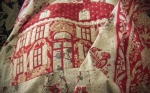
For this trip, however, I had a slightly different agenda. You see, I’ve been secretly working on an appliqué project. I was so good as my undercover stitching that folks were beginning to wonder if I was still a “dedicated appliquist”. But, I’ve gotten permission from Kaari to reveal that for the past few months, along with my good friend Keiko (designer extraordinaire), we’ve been working with Kaari to realize her quilt designs into real quilts. So, here you will see a small tidbit of the quilt I stitched that will be offered as an exclusive, and limited edition, kit by Kaari on her website French General.
Now before you head over to the website and wonder why you can’t order it yet…well, the fabric is from Kaari’s newest fabric collection, Maision de Garance, which isn’t out yet. (Visit www.unitednotions.com for a preview.) I believe that the kits will be available sometime in early November. But, if you are interested I would encourage you to check her website towards the end of October for full details. These kits will go quickly…I can guarantee you.
–Penny
Posted in Uncategorized | 4 Comments »

Cindy Vermillion Hamilton
I never had to learn the lesson about feeling fortunate about having friends. It seemed to be in me to appreciate those with similar interests from the time I was born. And, as friends have moved in and out of my life, I have gained something from each of them….even those good-for-nothing boyfriends of years ago. But, I must admit that quilting has brought me some of my most cherished friends.
One of the things I gained from an old boyfriend was the craft of quilting. I had been an embroiderer for years, and never really settled in on quilting. But, it was with his prodding that I bought my first fat quarter and dusted off my sewing machine. I remember the two of us visiting a local quilt show where I purchased a number of older Quilters Newsletter magazines. I had purchased the issues based on the cover quilts, and soon learned that there was a quilter that I was totally inspired by. Her name was Cindy Vermillion Hamilton and never in my wildest dreams did I ever think I would consider her one of my dear friends.
 This past Spring Cindy and I set out (with a few others quilters) to England to attend the famed V&A exhibit. It was my second trip with Cindy to the country we both have loved for decades. I won’t go on about all her quilts that have graced the covers of magazines, or all the high awards she’s earned at Paducah, etc. But, I will encourage you to search out a copy of her book, Medallion Quilts — Inspiration & Patterns published by AQS.
So, here is a picture of her…my quiet quilter friend…who is happy to sit for hours stitching in the window of her hotel room in Barnard Castle, North Yorkshire. Wish we were there right now.
–Penny
Posted in Uncategorized | 3 Comments »

Shopping at M&L
Once again, my friend Pam and I celebrated our birthdays (which land about two weeks apart) by taking an overnight adventure. This time, we decided to go back to Los Angeles again since we’ve been having so much fun there…and take in some of our favorite haunts. So over the Labor Day holiday we went, with the necessary equipment and supplies – GPS, iPhone, Water, Chocolate Chip Cookies – in search of fabric, beads, and pay-per-view in air-conditioned hotel rooms.
 The first landmark we wanted to visit while in the LA area was M&L Discount Fabric. I learned about this fabric store a few years ago from my friend Julia Z who casually mentioned that it was “where all old fabric goes to die”. And, it is just that. Housed in what looks to be an old grocery store, it is on the “gotta go” list for quilters looking for a bargain (or quilt backs) who just happen to be in Southern California.
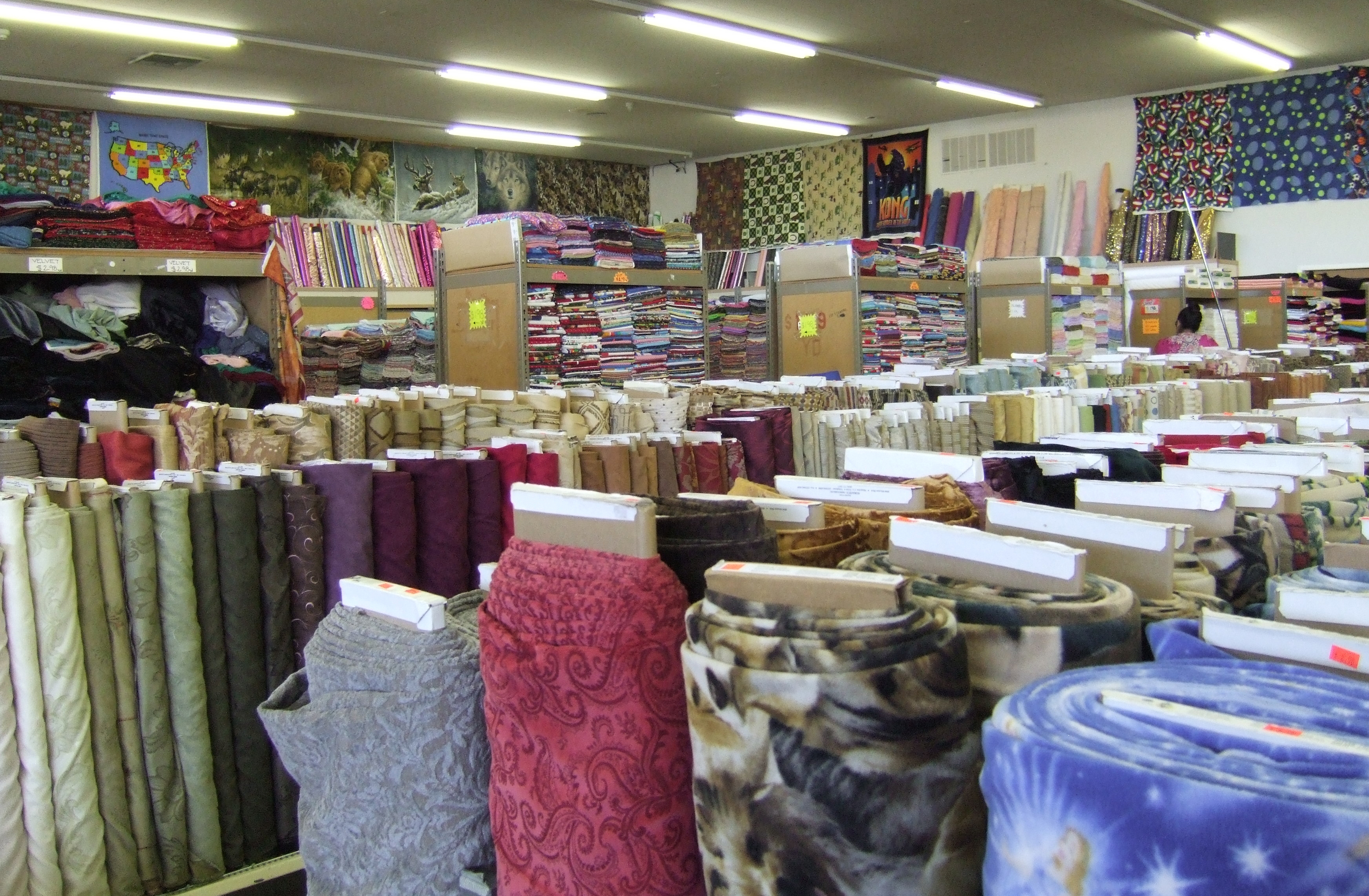 The shop is chock-a-block full of fabric. As you enter, you’ll be greeted by the latest fabric lines at regular prices…but, fear not. As you progress through the aisles and aisles of everything from quilting fabrics, dress linings, tulle, and various upholstery fabrics you’ll notice the prices drop, and then drop again. And, they even continue to drop further as you approach the unknow…or the flatfolds…that are stacked neatly in a dozen aisles as much as 5 feet high. For your efforts there you just might find a treasure oldie but still amazing fabric for $1.98/yard.
If you are planning a trip to the LA area, see if you can’t squeeze a trip. The store is located at 3430 W Ball Rd, Anaheim, CA 92804. Turns out that Disneyland is just down the street. So, drop the kids off first, but remember to leave room in the car to pick them up. And, if you don’t have a chance in the world of going to LA…my condolences. You can see from my full basket above that I had a successful hunting trip. Now for Pam’s basket…well, let’s just say that I’m a lightweight.
–Penny
Posted in Uncategorized | 1 Comment »

English Basket Quilt by Corliss
I know…I’ve been hearing from so many people as to why I’ve grown silent. Well, sometimes work (as in that thing that I need to remind myself actually pays my bills) takes precedence over all other things…including talking to all you lovely folks.
So, just so that people will know that I didn’t drop off the face of the earth, I’m going to post this little update on the English Basket Quilt I wrote about a couple of months ago. It seems that the story of this wonderful quilt continues.
Corliss from Threadbear Patchwork and Quilting in Australia has given me permission to post the above picture of her rendition (and pattern available to all of us) of the fabulous antique. Corliss had in progress pictures on her website and included in her pattern…but I had not seen it entirely done. Bravo….is all I can say.
If you want to check out Corliss’ website, hop over to http://www.threadbear.com.au/ and take a look. You’ll be happy you did. Included in the pattern section of her website are many of the wonderful quilts that Di Ford has designed, along with Corliss’ Civil War Brides Quilt pattern that has captured the imagination of many an appliquist.
Give me a little more time and I’ll certainly have some new stuff!
–Penny
P.S. And a special thanks to Pam who bought me the Basket Quilt pattern for my birthday. Yippee…more to add to my retirement plans.
Posted in Uncategorized | 2 Comments »

"Applique 12 Easy Ways"
I’m often asked by my students to recommend a good book for beginning appliquists. And, for years I have replied without hesitation that Elly Sienkiewicz’s book Applique 12 Easy Ways is the best on the market. Clear and instructional, it covers almost every way imaginable to hand applique.
Now there are other good books on the market, including those by Alex Anderson, but this one covers everything. And, since it includes the freezer paper method that I use, I’m a happy camper.

"Beloved Baltimore Album Quilts"
I was reminded about this book earlier today when I received an email notification that Elly is about to release another book in her series that focuses on Baltimore Album quilts. Beloved Baltimore Album Quilts will be released mid-October and just in time to include on your Christmas list. The notice says that there will be 25-8″ block patterns and will feature quilts from the 2010 exhibit Baltimore Album Review II: Baltimore’s Daughters – Friends Stitch Past to Future which will be at Houston this year. And, if the cover is any indication of what’s in the book…nice.
To get more information on this new book, I took a little look at the C&T Publishing website (www.ctpub.com), and was *shocked* when I saw that my old stand-by, Applique 12 Easy Ways, doesn’t seem to be in their current lineup of offerings. Can this be! I fear that it means what’s in the market place to purchase now may be all that is available.
So, if you were ever thinking of purchasing this essential book, and haven’t….now may be the time. Elly’s books command high prices once out of print, and I would suspect that your purchase might become an investment. But, as any financial investor would caution, this is just a guess.
–Penny
Posted in Uncategorized | 5 Comments »

Lana Wool Thread by Aurifil
A couple of weeks ago I wrote a post about some threads I’d received from a major manufacturer. I’m sure you could tell from my gushing that I love thread – to me it’s one of the essential components of my artists’ paint box. Well, it was another unexpected surprise that I should receive a comment on that post from Alex Vernonelli, the Marketing Director for Aurifil Threads (www.aurifil.com), offering to send me some of their threads for my enjoyment. So, after a few emails exchanged back and forth, and a guy from FedEx was knocking on my door trying to give me a package while I was trying to get into the shower. (Don’t care for that visual? I don’t blame you.)
All the way from Milan, Italy was a box containing samples of the various threads Aurifil offers in different weights ranging from 50/2 to 12/2. Now I will freely admit to you that one of the reasons I haven’t used Aurifil threads in my own applique is that they are two-ply. I’m married to three-ply so it would take a lot to get me away from that. Because I tug each stitch of my appliqué to get it to sink into the fabric…2-ply just hasn’t been strong enough. So, I honestly cannot say that I am head over heals in love with their cotton threads. (Sorry Alex! I warned you I’d be honest.) I know that many of my co-appliquists simply swear by them because they are very fine, and almost translucent. I’m just not a fan.

Lana Wool Threads
But, included in that box was a treasure that I’d never really seen or tried before. Included were some spools of Aurifil Lana wool threads for working wool appliqué. They are actually 50% wool and 50% acrylic and at 12/2 they aren’t as thick as pearl cotton but they seem quite strong because of the addition of the acrylic. And, with thread this thick I’m not so picky about it being two-ply. It seemed to glide right through the felted wool I tested.
I wasn’t in love with the color threads they sent me, but they did send me a color card so I know that nice colors are available. In fact, there is a collection of 12 country colors that Irish/French quilt designer Marianne Byrne has selected to coordinate with wool felt that are beautiful.

"Cinnamon Inspirations" by M Byrne
If you need further inspiration, Marianne has a book called Cinnamon Inspirations out that has patterns for several projects sewn with these threads. I happened to see a copy at Prairie Queens Quilt Shop (prairiequeensquilts.com), and am tempted to pick up a copy just to try some of the ideas.
So there you have it. Another tool for us to all experiment with. If you do wool applique, why don’t you tell us a little about the threads you prefer to use. California isn’t a real hot-bed of wool applique…I think it has something to do with the perennial spring like weather…but, I could be tempted. And, as Mr. Bennett would have said, if any other thread manufactuers want me to try out their threads…send them in; I’m quite at my leisure.
–Penny
Posted in Uncategorized | 2 Comments »

The Almshouses at Mapledurham
If any of you watch Masterpiece Mystery on PBS, you may have seen the recent airing of The Blue Geranium, a delightful Miss Marple who-done-it. In fact, if you missed it I believe you can still view (at least for a limited time) it on your home computer if you go to the PBS website at http://video.pbs.org/ and select The Blue Geranium under the heading of “Masterpiece”.
This particular rendition of the Agatha Christie classic is near and dear to my heart because it features as one of its locations the wonderful Mapledurham Estate which I’ve written about previously. And, in more than one scene, you have wonderful views of the Mapledurham Waterwheel as well a photos of the manor house.
 Since the late 1990’s, I’ve stayed at one or another of the various cottages that Mapledurham has offered for holiday rentals. Whenever I’ve led a group to the UK, we have stayed at these cottages often renting several neighboring cottages at the same time so that everyone could have their own space.
 I cannot even tell you how many quilts I’ve worked during my various stays. Or how many wonderful dinners we’ve had with friends circled around the dining table. It seems that as soon as we opened the doors to these charming country cottages that we are on a mission to make them our home, filling them with flowers and our recently-purchased antique treasures.
 So it was with great sadness that I learned this past spring that Mapledurham will no longer be offering its cottages as holiday rentals and has opted to long-term arrangements. Thankfully, we learned news of the closure when we had the opportunity to stay one more time. So, we took full advantage of breathing in every aspect of this delightful part of England. I am sure that you will then understand that it was with a small tear that I revisited this place again in the PBS airing.
 I’m on the lookout for a new home-away-from-home cottage rental now…so, if any readers have special information on cottages available in the Berkshire, UK area, please pass that information along to me. Our main requirement is that it feel like home.
–Penny
P.S. Special thanks to Lola for all the years of her welcoming us to Mapledurham.
Posted in Uncategorized | 1 Comment »
 The Dedicated Appliquist